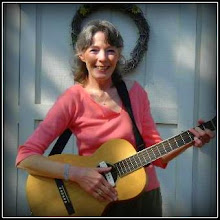
Dance Even if Nobody Is Watching
Dance even if Nobody is Watching
New York Times article by Tara Parker-Pope on Health
July 10, 2008, 1:33 pm
I am late to the Matt Harding fan club, but like four million other viewers before me, I can’t stop watching this man dance.
Mr. Harding is a 31-year-old YouTube sensation featured in The Times this week for an uplifting video that shows him dancing a sort of a jig, described by my colleague Charles McGrath as "an arm-swinging, knee-pumping step that could charitably be called goofy." Mr. Harding dances alone, and he dances with lemurs, underwater and with children and crowds at various locations around the world.
While Mr. Harding probably isn’t the most graceful dancer you’ve ever seen, his video is a happy reminder that the benefits of dancing aren’t limited to physical exercise. A telling 2003 New England Journal of Medicine report showed a lower risk for dementia among people over 75 who regularly danced during leisure time. But what was so surprising about the report is that other types of physical exercise didn’t affect dementia risk — dancing was the only physical activity that made a difference.
Other studies have shown music plays an important role in depression. Dance therapy has been used to relieve anxiety about taking tests, and researchers are studying the tango to help patients with Parkinson’s. Dance therapy has been shown to improve the quality of life for breast cancer patients as well.
In addition to taking you on a gorgeous tour of some exotic and not-so-exotic locales, Mr. Harding’s video will leave you envious of his lightness of spirit. And it might even make you want to dance. To learn more about Mr. Harding, read the full story here.
Man's Closest Relatives Endangered
 photo from Conservation International
Primates on a Slippery Slope
August 5, 2008 article (abbreviated)
By Lisa Bowen
Deforestation, Hunting Plague Humans' Closest Relatives
Not too many conservationists can claim being threatened by a drunk policeman armed with a machine gun as a work experience. For primatologist Ben Rawson, little in his life – and that of his colleagues – is ordinary.
Rawson, 36, is among dozens of scientists on several continents who provided data for the first comprehensive review in five years of the world’s 634 kinds of primates. The results are staggering: almost 50 percent of all monkeys, lemurs, apes and other primates are in danger of becoming extinct.
Field scientists who gather such data know how tough this kind of work can be. Rawson recalls his brush with a policeman involved in the illegal wildlife trade in Cambodia: "I was in the local village at night looking for guides to take to the field the next day," he says. "A guy rolled up on his motorbike and confronted us on the street. He started waving his machine gun around, with special emphasis on me."
In Southeast Asia, many ethnic groups have a culture of hunting wildlife. According to Rawson, this hadn’t been a problem until the proliferation of guns in the region from various conflicts. Today, hunting is a serious threat to many species.
In Southeast Asia, many ethnic groups have a culture of hunting wildlife. According to Rawson, this hadn’t been a problem until the proliferation of guns in the region from various conflicts. Today, hunting is a serious threat to many species.
Habitat destruction is another direct cause for loss of primates worldwide, particularly from burning and clearing tropical forests. Not only does this destroy primate habitat, it also emits 20 percent of global greenhouse gases fueling climate change. Rawson sees climate change as an indirect, yet genuine threat to primates. He cites a recent report that predicts a one-meter sea level rise that would affect six million people, mostly in Vietnam’s Mekong Delta. "Massive numbers of people will be migrating into forested areas further north, and clearing those forests for agriculture," he points out.
Working for the past six years in Cambodia and Vietnam, where approximately 90 percent of the primates are at risk of extinction, Rawson has witnessed the crisis unfold. "Pretty much every time you go to the field you can see the problem," he says. "You see it with the creeping clearance of forests for agriculture. You see it in the dismembered remains of wildlife in the markets."
Despite the challenges, Rawson is cautiously optimistic. "The discovery of a new population, the protection of a key area; these are the things that give you hope," he explains. "However, realistically, all species of primates in Cambodia and Vietnam are on a slippery slope with populations still declining, often at drastic rates." ......
"We all need to understand how our behavior impacts the world around us," Rawson says. Being a smart consumer can have a direct effect. For example, when you buy timber products such as outdoor furniture, be sure they are certified as legally harvested. That will reduce the amount of illegally harvested timber, which means a reduction in habitat loss for primates."
Learn more at Conservation International http://www.conservationinternational.org/
Slow Food USA


photos from: Slow Food USA
Live the Slow Life
Living the slow life with food as the focus is as rewarding as it is easy, and it can be done daily by each one of us. Ultimately, it is about pleasure and taste, knowledge and choice. Once we begin to take an interest in the enjoyment of food, and in finding out where our food comes from, we can begin to see the effects of these choices. When we shorten the distance—both literal and figurative—that our food travels to get to us, we are participating in the Slow Food movement. Slow Food is about coming together as a food community—connecting producers and co-producers, coming together on the farm, in the market, and at the table—to create and enjoy food that is good, clean and fair.
Slow Food is also simply about taking the time to slow down and to enjoy life with family and friends. Every day can be enriched by doing something slow - making pasta from scratch one night, seductively squeezing your own orange juice from the fresh fruit, lingering over a glass of wine and a slice of cheese - even deciding to eat lunch sitting down instead of standing up. For example, here in the Slow Food USA office, we take a moment to eat lunch together every day.
from Slow Food USA http://www.slowfoodusa.org/change/index.html
UPDATE: Regarding the Summer Art and Conservation Series in Charleston, S.C.

Please note NEW TIME : Wednesdays @ 12:00 P.M. NOON for the ART AND CONSERVATION SERIES at WATERFRONT PARK, CHARLESTON, S.C. Wednesdays July16 through August 6th.
from the Coastal Conservation League
Art and Nature! ~ Coastal Conservation League July/ Summer Event in the Park
 Coastal Conservation League of Charleston, South Carolina July/Summer Event in the Park
Here's What's Happening in July
W E D N E S D A Y S at the Waterfront
A summer lecture series merging Art and Conservation during VANISHING LANDSCAPES, A Juried Art Exhibition 2008 Piccolo Spoleto Festival
City Gallery at Waterfront Park, 34 Prioleau Street, Charleston, SC 843-958-6484
Join us each Wednesday beginning July 2nd through August 6th at 11:00am for a presentation by one of the selected artists for the 2008 Piccolo Spoleto juried art exhibition, "Vanishing Landscapes," at the City Gallery at Waterfront Park in Charleston.
Each artist will discuss their work, joined by a Coastal Conservation League staff member, who will present the relevant environmental issue and provide important context in which to view this challenging exhibit.
WEDNESDAY, JULY 2Artist Lidia Cuellar Richardson "On a Cloudy Day"CCL Program Director Nancy Vinson"How Clean is Charleston’s Air?"
WEDNESDAY, JULY 9Artist Carol McGill "Scorched Earth"CCL Project Manager Ben Moore"A Clean Energy Policy for South Carolina"
WEDNESDAY, JULY 16Artist Lynne Riding "Pritchard Island Series"CCL South Coast Office Director, Patrick Moore"Our Fragile Marsh Islands"
WEDNESDAY, JULY 23Artist Paul Hitopoulos "Divided Waters"CCL North Coast Office Director, Nancy Cave"A Coal Plant’s Impact on the Pee Dee River"
WEDNESDAY, JULY 30Photographer Rick Rhodes "526"CCL Project Manager, Lisa Jones Turansky"A New Way to Work"
WEDNESDAY, AUGUST 6Artist Karen Silvestro "Loss and Bloom"CCL Project Manager Hamilton Davis"Development East of the Edisto"
mailto:brianb@scccl.org
Coastal Conservation League: https://coastalconservationleague.org/
Parking Day


More than 70% of most cities' outdoor space is dedicated to the private vehicle while only a fraction of that land is allocated to open space for people. Around the nation, inexpensive curbside parking results in increased traffic, wasted fuel, and more pollution. It’s time to rethink the way streets are used!
A metered parking spot is an inexpensive short-term lease for a 10'x20' plot of land. Imagine what you can do in a space usually dedicated to private vehicle storage. Parking Day began in a single metered parking spot in San Francisco and then spread around the world. People who want more open space, less traffic, and safer streets have joined together.
A metered parking spot is an inexpensive short-term lease for a 10'x20' plot of land. Imagine what you can do in a space usually dedicated to private vehicle storage. Parking Day began in a single metered parking spot in San Francisco and then spread around the world. People who want more open space, less traffic, and safer streets have joined together.
Create a Certified Wildlife Habitat
 photo by Craig Smith
Why Garden For Wildlife?
Watching wildlife in action can be fun and relaxing for everyone. Your habitat may attract beautiful songbirds, butterflies, frogs, and other interesting wildlife for viewing from your very own window.
Replacing grass lawns with native wildflowers, shrubs, and trees will increase the beauty of your property and provide a nurturing refuge for wildlife.
Restoring habitats where commercial and residential development have degraded natural ecosystems can be your way of giving back to wildlife.
Gardening practices that help wildlife, like reducing the use of chemicals, conserving energy and water, and composting also help to improve air, water and soil quality.
Gardening for wildlife can help you share your love of wildlife with your neighbors and help them get involved in creating a home for wildlife.
All species of wildlife need the basics of food, water, cover and places to raise young.
from the National Wildlife Federation http://www.nwf.org/backyard/
NatureServe

NatureServe is a non-profit conservation organization whose mission is to provide the scientific basis for effective conservation action. NatureServe and its network of natural heritage programs are the leading source for information about rare and endangered species and threatened ecosystems.
NatureServe represents an international network of biological inventories—known as natural heritage programs or conservation data centers—operating in all 50 U.S. states, Canada, Latin America and the Caribbean. Together we not only collect and manage detailed local information on plants, animals, and ecosystems, but develop information products, data management tools, and conservation services to help meet local, national, and global conservation needs. The objective scientific information about species and ecosystems developed by NatureServe is used by all sectors of society—conservation groups, government agencies, corporations, academia, and the public—to make informed decisions about managing our natural resources.
One of NatureServe’s Goals is to help make biodiversity a mainstream consideration in all significant conservation and natural resource management decisions by making it simple for conservationists, government agencies, corporations, and landowners to access and use high-quality biodiversity information.
NatureServe carries on a legacy of conservation work that began when The Nature Conservancy helped to establish the first state natural heritage program in 1974. Over the next two decades The Nature Conservancy and a collection of public and private partners built a network of natural heritage programs in the United States to collect and manage data about the status and distribution of species and ecosystems of conservation concern.
As this network expanded to include Canada and Latin America, natural heritage programs became the recognized source for the most complete and detailed information on rare and endangered species and threatened ecosystems, relied upon by government agencies, corporations, and the conservation community alike. Today the NatureServe network includes 74 independent natural heritage programs and conservation data centers throughout the Western Hemisphere, with some 800 dedicated scientists and a collective annual budget of more than $45 million.
NatureServe, the membership organization for this network, was established in 1994 and was originally known as the Association for Biodiversity Information. By 2001, the organization had grown and evolved into its present form. The Nature Conservancy, which since the 1970s had provided scientific and technical support to the network, transferred this role to NatureServe, along with professional staff, databases, and responsibility for the scientific standards and procedures under which the network operates. NatureServe is headquartered in Arlington, Virginia, with regional offices in four U.S. locations and in Canada.

Subscribe to:
Posts (Atom)