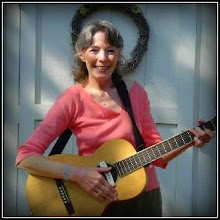
Gifts from my Ancestors: The Rhythms of Life


I was a shy quiet child raised in the ilk of a patriarchal industrialized society, but for some reason, my ancestral indigenous roots came through strong in me. Some of the most beautiful music to my ears is the music of nature: rain on the roof, thunder in the sky, the sweet sound of baby kittens meowing, the wind and birds singing throughout the trees, the rhythm of the ocean waves and rippling mountain streams.
Perhaps, my simple love for nature came from my ancestral potato famine roots in Ireland or maybe from my Native American great grandmother whose name I, sadly, never knew because of discrimination from the other side of the family. I love to find stones with interesting designs that ignite the storyteller in me. I love the spiraling pine cones that are always so centering. Animals and trees are precious to me. I see and hear their music in the rhythms of their lives. I have often found strange sorts of comfort in the natural mysteries of life, and it saddens me that so many people have been taught and programmed to be afraid of these things. It isn’t healthy to separate ourselves from what is a natural part of us, because it stands in the way of our unfolding. ~ Patty Ann Smith


Chicago Climate Action Plan ~ Press Release


Mayor Daley, Business, Foundations, Government Leaders Announce Comprehensive Climate Action Plan

Mayor Richard M. Daley today was joined by leaders from business and the not-for- profit sectors, state and local government officials and residents to unveil the Chicago Climate Change Plan, a comprehensive and detailed strategy to help lower greenhouse gas emissions and address climate change. The plan builds on the many efforts the City has already implemented to make Chicago the most environmentally friendly city in the nation.
In a news conference held at the Shedd Aquarium, the Mayor stressed that the effort will require an enormous amount of hard work and cooperation and the commitment of not only government but also every individual, business and institution in the city.
"This is an ambitious plan that contains many important ideas that will ensure Chicago continues to distinguish itself as an environmental role model for the rest of the nation," Daley said.
"We can continue to lead by example and the Chicago Climate Change Plan is the next step. We can't solve the world's climate change problem in Chicago, but we can do our part. We have a shared responsibility to protect our planet," he said.
Under the plan, which was developed by a Task Force convened by Daley in 2007 and co-chaired by Adele Simmons, President of Global Philanthropy Partnership, and Sadhu Johnston, the City's Chief Environmental Officer, the City will work to reduce greenhouse gas emissions to 25 percent below 1990 levels (1990 levels are the recommended baseline according to the Kyoto Protocol).
Other cities have set similar goals, but Chicago's plan is the first to both identify emission sources and anticipated impacts, and propose ideas that specifically respond to that research.
"This is a challenge, but the benchmark goal is both far enough in the future to allow sufficient time to make substantive changes and close enough to see benefits in our daily lives. Thankfully, during this tough economy there is some funding already committed from private resources to help pay for parts of this plan, but not nearly enough." Daley said.
"Over the next few years we'll be depending on the commitment and collective action of individuals, businesses and others to do their part.
"And, of course, it will very important for Springfield and the federal government in Washington, D.C. to do their part and provide greater resources for public transportation, building improvements, research on new technologies and other measures," he said.
But, this is about more than cleaning up our environment, the Mayor said.
"At the same time, when we make these improvements we're greening our economy for the future and creating the jobs of tomorrow," Daley said.
"The benefits of the plan go beyond improving the environment, which is a critical goal in and of itself. The actions that have the greatest impact will save companies and residents money, enhance our quality of life and position the city and its residents for future prosperity," he said.
The Chicago Climate Action Plan outlines a roadmap of 29 actions that might be taken for mitigating greenhouse gas in four areas: buildings; transportation; energy; and waste pollution. Experts identified these sources are being responsible for the vast majority of greenhouse gas emissions in Chicago. The Plan also identifies nine actions that could help the city adapt to the changes already occurring.
Because the Plan takes a long-term approach, it will be evaluated over time to determine where these actions should be modified or revised. This flexible approach allows for the accommodation of new technologies, new laws and new opportunities as they evolve.
Daley gave three examples of ideas included in the plan that the City will be moving forward with right away:
A "Green Office Challenge" that will spur high rise office buildings to save energy, increase recycling and water efficiency and reduce paper.
An updated Chicago Energy Efficiency Building Code, which will bring our current code up to international standards and be easier to understand.
And innovative ways to help property owners save money by making their buildings more energy efficient.
Among the other steps proposed in the plan and that the city is considering are:
Large scale solar energy installations at City facilities.
New partnerships to make it easier for residents and businesses to take greater advantage of public transportation and save money.
The construction of four publicly accessible alternative fueling stations.
Implementation of key components of the Chicago 2015 Bike Plan.
A communications and outreach plan to engage all residents and businesses in the Chicago Climate Action Plan.
But other important steps are much simpler and within the reach of each individual. They save money and they protect the environment, Daley said.
These are things such as:
Driving less and walking more
Using more energy-efficient light bulbs
Turning down the thermostat a few degrees in winter or up a few degrees in summer
Insulating and weatherizing your home
Turning off appliances and computers when they're not in use, and
Planting trees and shrubs around your home to reduce temperatures.
The Chicago Climate Action Plan builds on the City's existing programs and successes. For almost twenty years, Daley and the City of Chicago have led the nation with innovative initiatives to make Chicago the most environmentally friendly city in the nation.
This includes planting more a half million trees, mandating the construction of environmentally friendly buildings and installing roof top gardens on city owned buildings.
Chicago also boasts more Leadership in Energy and Environmental Design-certified (LEED) buildings than any other city and has more than four million square feet of green roof projects either completed or underway.
Over the past two years alone, the City and its partners distributed more than one million energy-saving compact fluorescent light bulbs to residents. The City passed a comprehensive storm water management ordinance.
Having a comprehensive climate plan in place will enable the City to take advantage of new funding sources as they arise, as well as existing state and federal dollars, loans, grants and private contributions, the Mayor said.
The City is also working with the private sector to increase market-based opportunities and with federal and state governments to leverage additional dollars to achieve the goals of the Chicago Climate Action Plan, he said.
As part of the Chicago Climate Action Plan, the City launched a new Web site http://www.chicagoclimateaction.org/ where individuals and businesses can learn about climate change, what they can do in their daily lives to reduce emissions, and what the City is doing to protect and preserve the environment.
"In Chicago we have long appreciated that cities are no longer the enemies of the natural environment; rather they're leading the way in preserving and protecting it," Daley said.
"Since I have been mayor, my goal has been to make Chicago a shining example of how a large city can live in harmony with its environment and as a result, be a better place for all its residents. I am confident that if we address the climate change challenge together, with creativity and boldness, then our city will continue to lead the world in designing a path to a more secure future," he said.
In our bones is the rock itself;
in our blood is the river;
our skin contains the shadow of
every living thing we ever came across.
This is what we brought with us long ago.
~ Ute song

Dance Even if Nobody Is Watching

Dance even if Nobody is Watching
New York Times article by Tara Parker-Pope on Health
July 10, 2008, 1:33 pm

I am late to the Matt Harding fan club, but like four million other viewers before me, I can’t stop watching this man dance.
Mr. Harding is a 31-year-old YouTube sensation featured in The Times this week for an uplifting video that shows him dancing a sort of a jig, described by my colleague Charles McGrath as "an arm-swinging, knee-pumping step that could charitably be called goofy." Mr. Harding dances alone, and he dances with lemurs, underwater and with children and crowds at various locations around the world.
While Mr. Harding probably isn’t the most graceful dancer you’ve ever seen, his video is a happy reminder that the benefits of dancing aren’t limited to physical exercise. A telling 2003 New England Journal of Medicine report showed a lower risk for dementia among people over 75 who regularly danced during leisure time. But what was so surprising about the report is that other types of physical exercise didn’t affect dementia risk — dancing was the only physical activity that made a difference.
Other studies have shown music plays an important role in depression. Dance therapy has been used to relieve anxiety about taking tests, and researchers are studying the tango to help patients with Parkinson’s. Dance therapy has been shown to improve the quality of life for breast cancer patients as well.
In addition to taking you on a gorgeous tour of some exotic and not-so-exotic locales, Mr. Harding’s video will leave you envious of his lightness of spirit. And it might even make you want to dance. To learn more about Mr. Harding, read the full story
here.

Man's Closest Relatives Endangered

photo from Conservation International


Primates on a Slippery Slope
August 5, 2008 article (abbreviated)
By Lisa Bowen
Deforestation, Hunting Plague Humans' Closest Relatives
Not too many conservationists can claim being threatened by a drunk policeman armed with a machine gun as a work experience. For primatologist Ben Rawson, little in his life – and that of his colleagues – is ordinary.
Rawson, 36, is among dozens of scientists on several continents who provided data for the first comprehensive review in five years of the world’s 634 kinds of primates. The results are staggering: almost 50 percent of all monkeys, lemurs, apes and other primates are in danger of becoming extinct.
Field scientists who gather such data know how tough this kind of work can be. Rawson recalls his brush with a policeman involved in the illegal wildlife trade in Cambodia: "I was in the local village at night looking for guides to take to the field the next day," he says. "A guy rolled up on his motorbike and confronted us on the street. He started waving his machine gun around, with special emphasis on me."
In Southeast Asia, many ethnic groups have a culture of hunting wildlife. According to Rawson, this hadn’t been a problem until the proliferation of guns in the region from various conflicts. Today, hunting is a serious threat to many species.
Habitat destruction is another direct cause for loss of primates worldwide, particularly from burning and clearing tropical forests. Not only does this destroy primate habitat, it also emits 20 percent of global greenhouse gases fueling climate change. Rawson sees climate change as an indirect, yet genuine threat to primates. He cites a recent report that predicts a one-meter sea level rise that would affect six million people, mostly in Vietnam’s Mekong Delta. "Massive numbers of people will be migrating into forested areas further north, and clearing those forests for agriculture," he points out.
Working for the past six years in Cambodia and Vietnam, where approximately 90 percent of the primates are at risk of extinction, Rawson has witnessed the crisis unfold. "Pretty much every time you go to the field you can see the problem," he says. "You see it with the creeping clearance of forests for agriculture. You see it in the dismembered remains of wildlife in the markets."
Despite the challenges, Rawson is cautiously optimistic. "The discovery of a new population, the protection of a key area; these are the things that give you hope," he explains. "However, realistically, all species of primates in Cambodia and Vietnam are on a slippery slope with populations still declining, often at drastic rates." ......
"We all need to understand how our behavior impacts the world around us," Rawson says. Being a smart consumer can have a direct effect. For example, when you buy timber products such as outdoor furniture, be sure they are certified as legally harvested. That will reduce the amount of illegally harvested timber, which means a reduction in habitat loss for primates."
Learn more at Conservation International http://www.conservationinternational.org/

Slow Food USA


photos from: Slow Food USA
Live the Slow Life
Living the slow life with food as the focus is as rewarding as it is easy, and it can be done daily by each one of us. Ultimately, it is about pleasure and taste, knowledge and choice. Once we begin to take an interest in the enjoyment of food, and in finding out where our food comes from, we can begin to see the effects of these choices. When we shorten the distance—both literal and figurative—that our food travels to get to us, we are participating in the Slow Food movement. Slow Food is about coming together as a food community—connecting producers and co-producers, coming together on the farm, in the market, and at the table—to create and enjoy food that is good, clean and fair.
Slow Food is also simply about taking the time to slow down and to enjoy life with family and friends. Every day can be enriched by doing something slow - making pasta from scratch one night, seductively squeezing your own orange juice from the fresh fruit, lingering over a glass of wine and a slice of cheese - even deciding to eat lunch sitting down instead of standing up. For example, here in the Slow Food USA office, we take a moment to eat lunch together every day.

UPDATE: Regarding the Summer Art and Conservation Series in Charleston, S.C.


Please note NEW TIME : Wednesdays @ 12:00 P.M. NOON for the ART AND CONSERVATION SERIES at WATERFRONT PARK, CHARLESTON, S.C. Wednesdays July16 through August 6th.

from the Coastal Conservation League

http://www.coastalconservationleague.org/


Art and Nature! ~ Coastal Conservation League July/ Summer Event in the Park

Coastal Conservation League of Charleston, South Carolina July/Summer Event in the Park
Here's What's Happening in July
W E D N E S D A Y S at the Waterfront
A summer lecture series merging Art and Conservation during VANISHING LANDSCAPES, A Juried Art Exhibition 2008 Piccolo Spoleto Festival
City Gallery at Waterfront Park, 34 Prioleau Street, Charleston, SC 843-958-6484
Join us each Wednesday beginning July 2nd through August 6th at 11:00am for a presentation by one of the selected artists for the 2008 Piccolo Spoleto juried art exhibition, "Vanishing Landscapes," at the City Gallery at Waterfront Park in Charleston.
Each artist will discuss their work, joined by a Coastal Conservation League staff member, who will present the relevant environmental issue and provide important context in which to view this challenging exhibit.

WEDNESDAY, JULY 2Artist Lidia Cuellar Richardson "On a Cloudy Day"CCL Program Director Nancy Vinson"How Clean is Charleston’s Air?"
WEDNESDAY, JULY 9Artist Carol McGill "Scorched Earth"CCL Project Manager Ben Moore"A Clean Energy Policy for South Carolina"
WEDNESDAY, JULY 16Artist Lynne Riding "Pritchard Island Series"CCL South Coast Office Director, Patrick Moore"Our Fragile Marsh Islands"
WEDNESDAY, JULY 23Artist Paul Hitopoulos "Divided Waters"CCL North Coast Office Director, Nancy Cave"A Coal Plant’s Impact on the Pee Dee River"
WEDNESDAY, JULY 30Photographer Rick Rhodes "526"CCL Project Manager, Lisa Jones Turansky"A New Way to Work"
WEDNESDAY, AUGUST 6Artist Karen Silvestro "Loss and Bloom"CCL Project Manager Hamilton Davis"Development East of the Edisto"
mailto:brianb@scccl.org
Coastal Conservation League: https://coastalconservationleague.org/

Parking Day


More than 70% of most cities' outdoor space is dedicated to the private vehicle while only a fraction of that land is allocated to open space for people. Around the nation, inexpensive curbside parking results in increased traffic, wasted fuel, and more pollution. It’s time to rethink the way streets are used!
A metered parking spot is an inexpensive short-term lease for a 10'x20' plot of land. Imagine what you can do in a space usually dedicated to private vehicle storage. Parking Day began in a single metered parking spot in San Francisco and then spread around the world. People who want more open space, less traffic, and safer streets have joined together.